
Doodle care
Everything you need to know…
The five stages of puppy development
- 0 to 2 weeks
Neonatal period
Puppies can touch and taste at birth, but that’s about it. During this period they are going to be most influenced by their mother and littermates, and will start learning some simple social skills, coordination and the ranking process. Mostly, they’ll just eat: newborns need to have milk from mum or a commercial milk replacer about every two hours.
- 2 to 4 weeks
Transitional period
Their eyes open, they stand and walk, their sense of smell and hearing develops, they wag their tail, teeth start coming in, and they’ll even start to bark. By the end of this period they should be able to use the bathroom on their own and see quite well.
- 4 to 12 weeks
Socialisation period
This is the stage where it’s incredibly important to introduce your puppy to other people and dogs. By five weeks, puppies are aware of their surroundings and start really enjoying playtime. Good experiences with people from weeks 5 to 7 will play a large role in how they continue to interact. But even though they’ll start being influenced by people after about a month, ideally you want puppies to remain with their mother and littermates for eight weeks, to learn inhibited play biting and other dog socialisation cues.
By week seven, you may be able to start house-training your puppy. From weeks 8 to 10, your pup will go through a normal “fear” period that can be helped with training that is positive and encouraging. But the true training “golden time” is from 9 to 12 weeks, because your pup is actively working on social skills and paying attention to both people and littermates.
- 3 to 6 months
Ranking period
- 6 to 18 months
Adolescence
Puppy socialisation
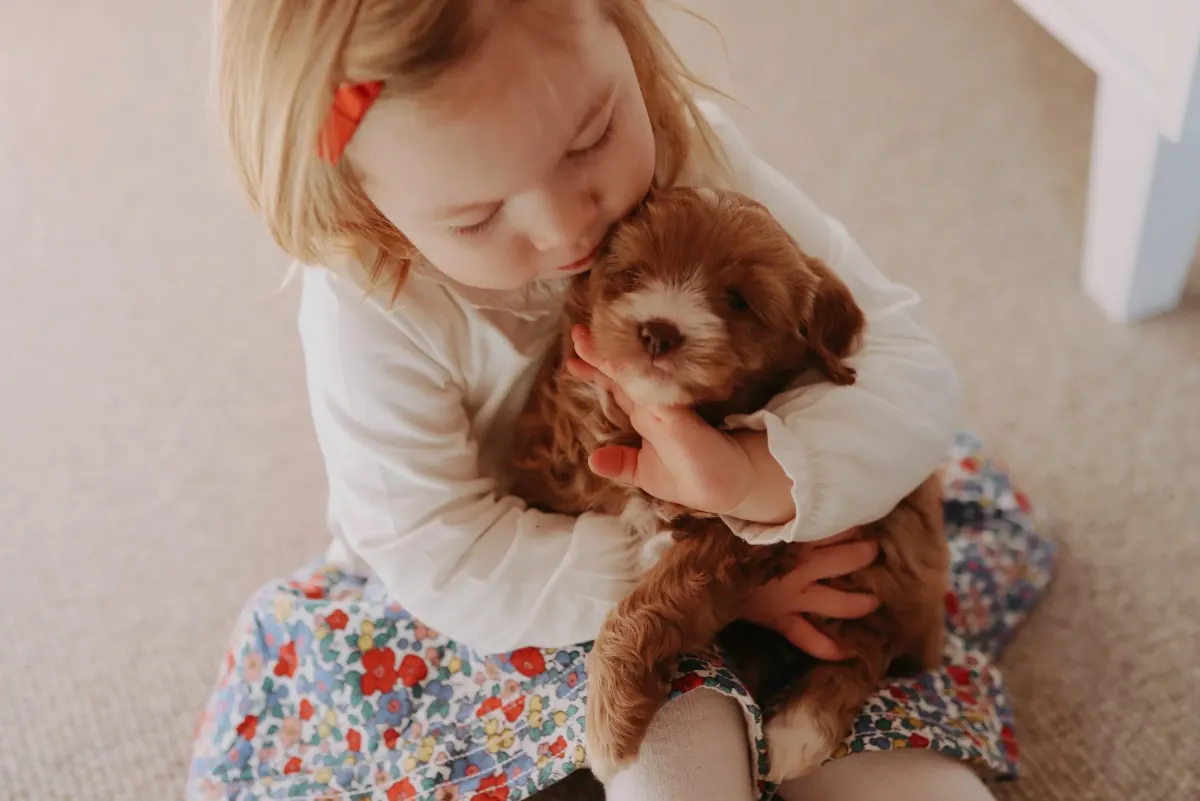
Our puppies thrive from being raised in our spacious country home and having an enriched environment.
We follow the enriched effect very closely, increasing stimulation at a gentle and steady rate throughout their growth. Our puppies have an enriched play and bed area where gentle stimulus is added. This helps develop their minds and bodies.
As the puppies are raised in our home, they are exposed to the normal hustle and bustle of an active family home. Alongside this they have times of the day where they will listen to “sounds sociable”, a track with a full range of sounds and noises, to get them adjusted to everyday life in a confident way.
Young dogs get further enrichment as they get older, by way of formal training and socialisation.
Spay and neuter
The spay or neuter of a pet dog makes them a much better pet, and reduces the likelihood of unwanted behaviour and illnesses. We are huge supporters of this, and there is no need for a dog to remain entire unless bought on breeding terms.
Our pet puppies are sold with a spay and neuter contract policy in place, and the terms must be adhered to. Our puppies must be spayed or neutered by 6 months of age, otherwise a further payment will be billed to the customer.