
About Australian Labradoodles
Very loving, social, highly trainable and excellent companion dogs with incomparable beauty. They are eager to please and quick to learn, which makes them perfect for therapy work or a perfect family companion.
Where the breed began
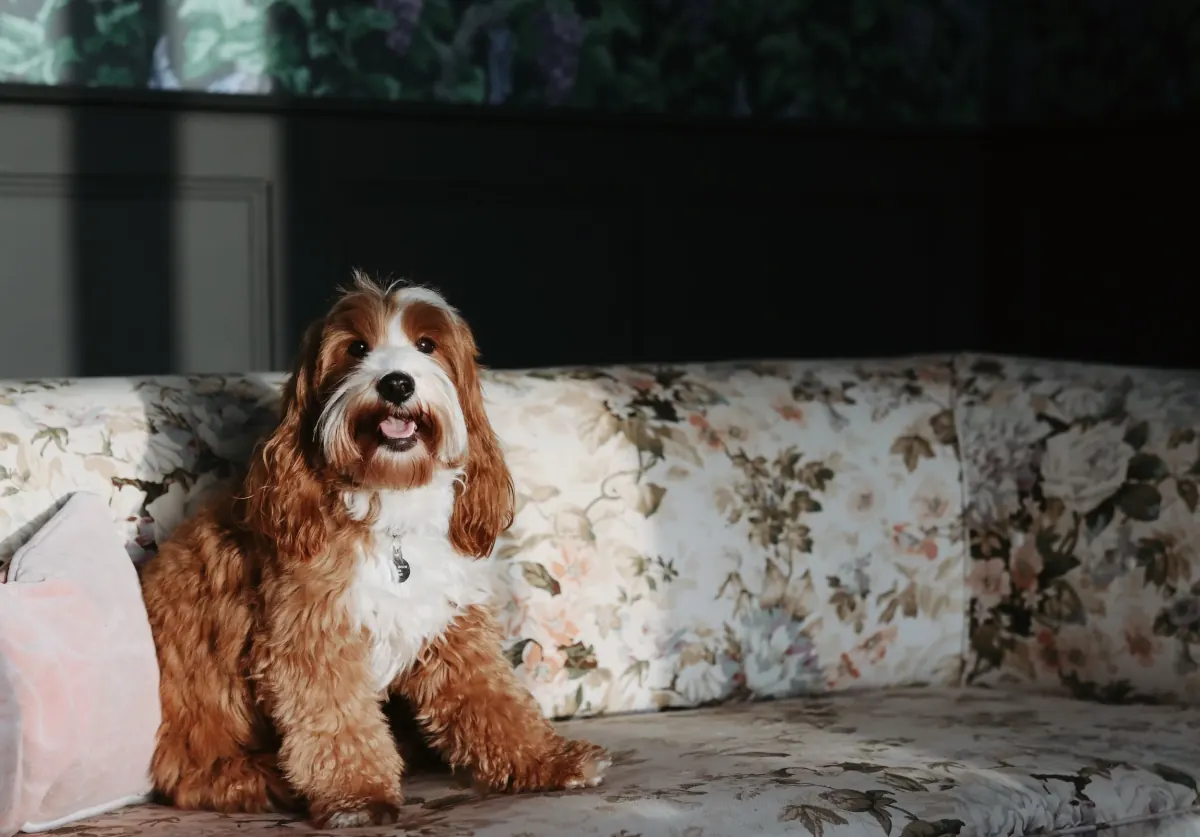
The Australian Labradoodle breed dates back to the 1980s and was initiated by Wally Conran of Royal Guide Dogs, located in Victoria, Australia. The intent was to create a breed that was allergy and asthma friendly, with the temperament of a service dog.
What Wally started as a cross between a Labrador Retriever and a Poodle was further developed by the Tegan Park and Rutland Manor breeders in Australia, who took over where Wally left off. Selective breeding and other breed infusions have resulted in the authentic multigenerational Labradoodle we know and love today, with all the wonderful bred characteristics that make them unique.
Labradoodle sizes
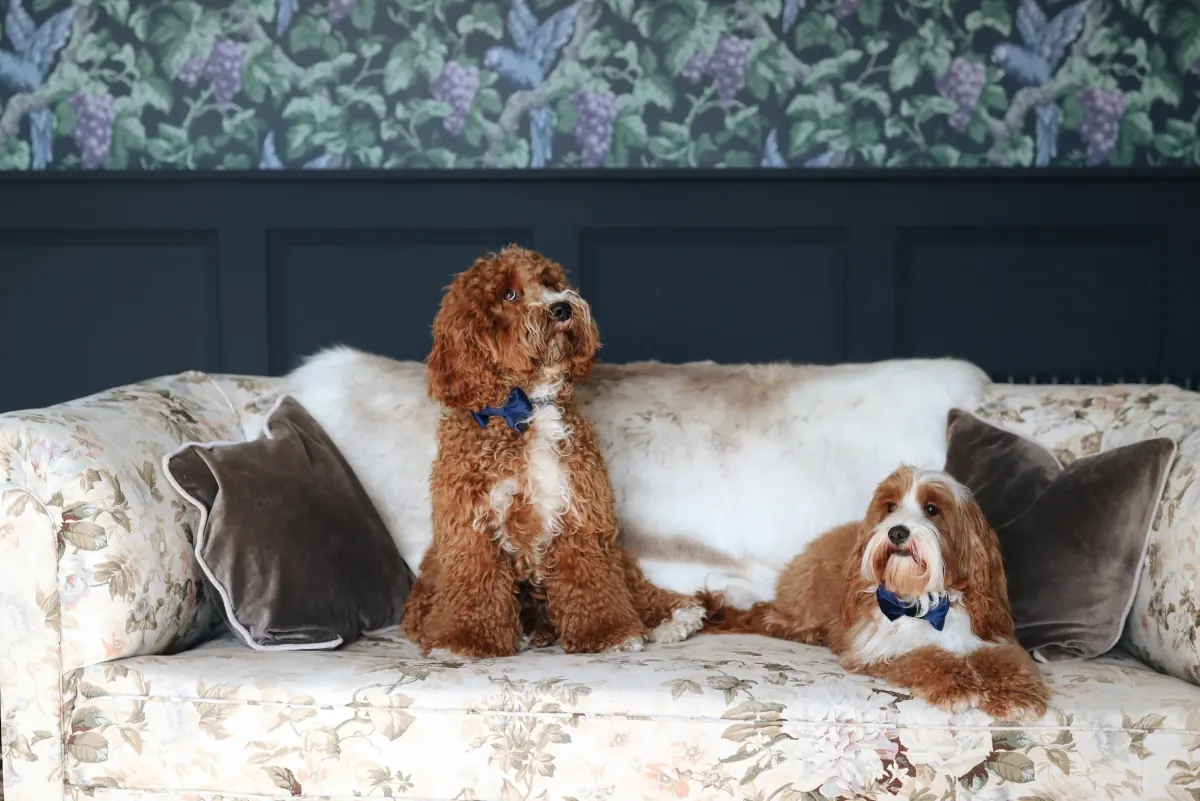
| Standard | Over 22″ at the highest point of the shoulders |
|---|---|
| Medium | 17″ to 21″ to the shoulder |
| Miniature | 14″ to 16″ at the shoulder |
At Minton Manor Labradoodles we focus on the miniature Labradoodle. We find this to be the best size for a family companion, similar in size to a spaniel.
Coat types
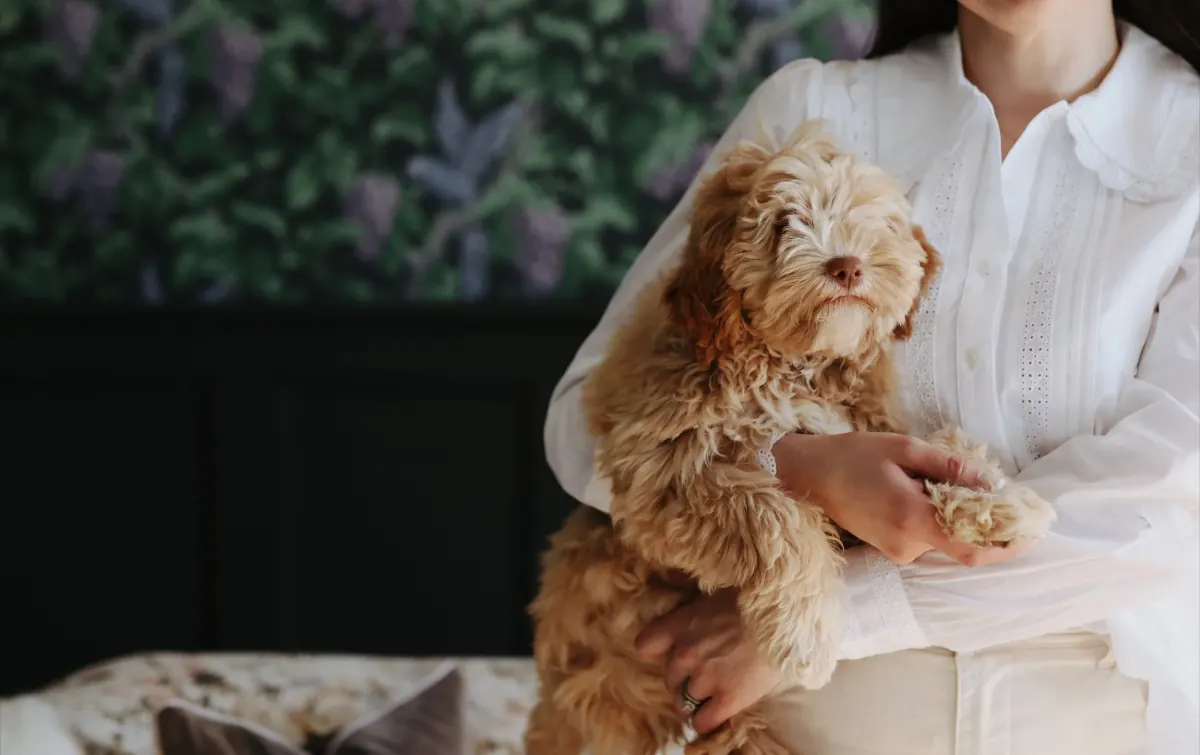
Australian Labradoodles have woolly, curly and fleece coats. These are non-shedding and allergy-friendly (hypoallergenic).
Labradoodle Origin have scruffy, wavy coats. All these coat types vary in shedding, from light or moderate to heavy shedding.
Are all Labradoodles non-shedding?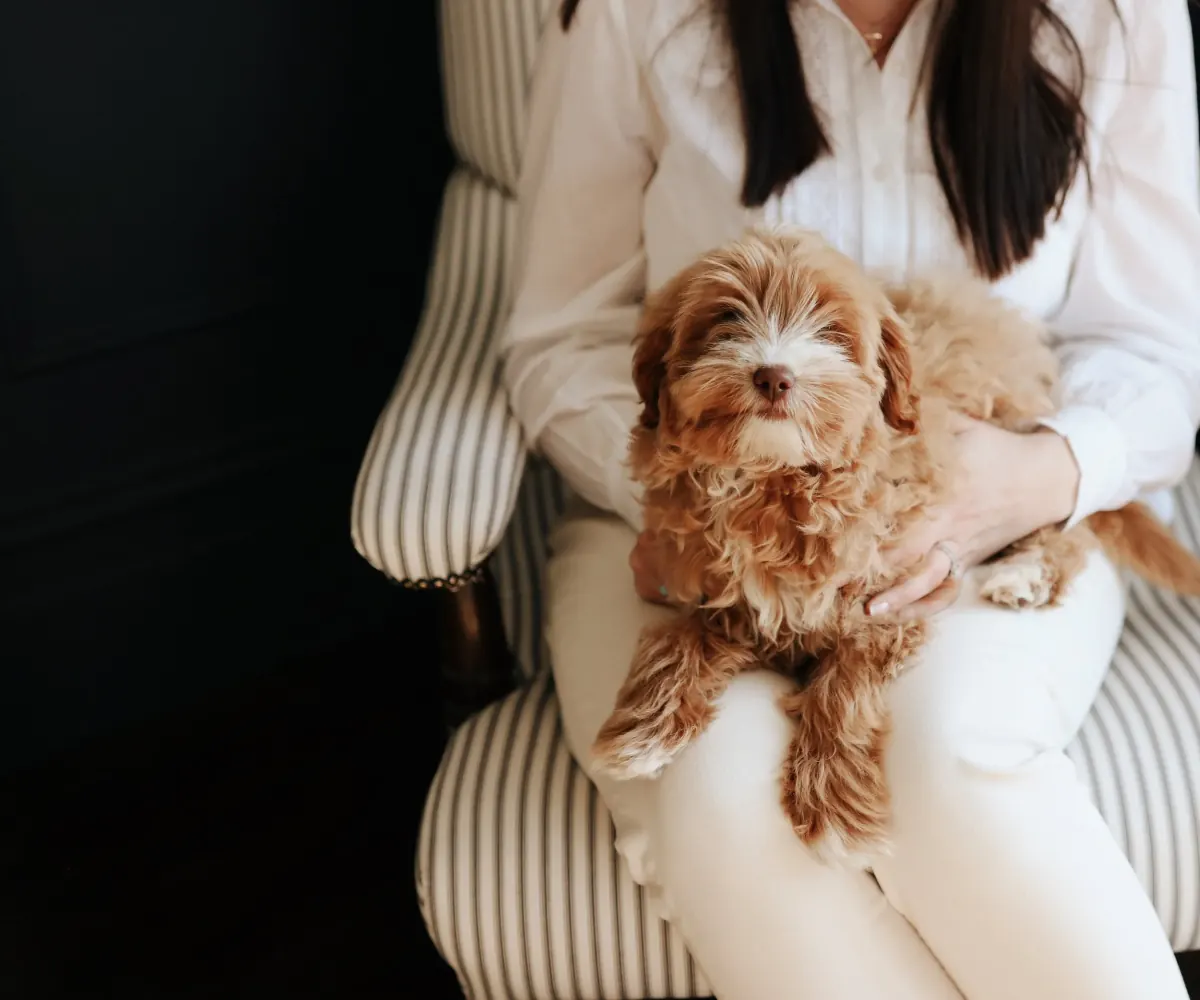
Grooming
The grooming requirement varies depending on the coat length, lifestyle and grooming routine.
- The scruffy or wavy coated Labradoodle needs very little grooming: weekly brushing.
- The woolly, curly and fleece coated Labradoodle requires regular grooming, and should be clipped every 12 weeks alongside regular brushing.
- Neither requires frequent bathing, as their coats repel moisture and dirt.
- Labradoodles require their nails trimmed and ears cleaned, with ear hair being plucked out.
Health testing
Having healthy dogs with a wonderful life is of the utmost importance to us, therefore we thoroughly health test all our breeding dogs.
Every dog’s results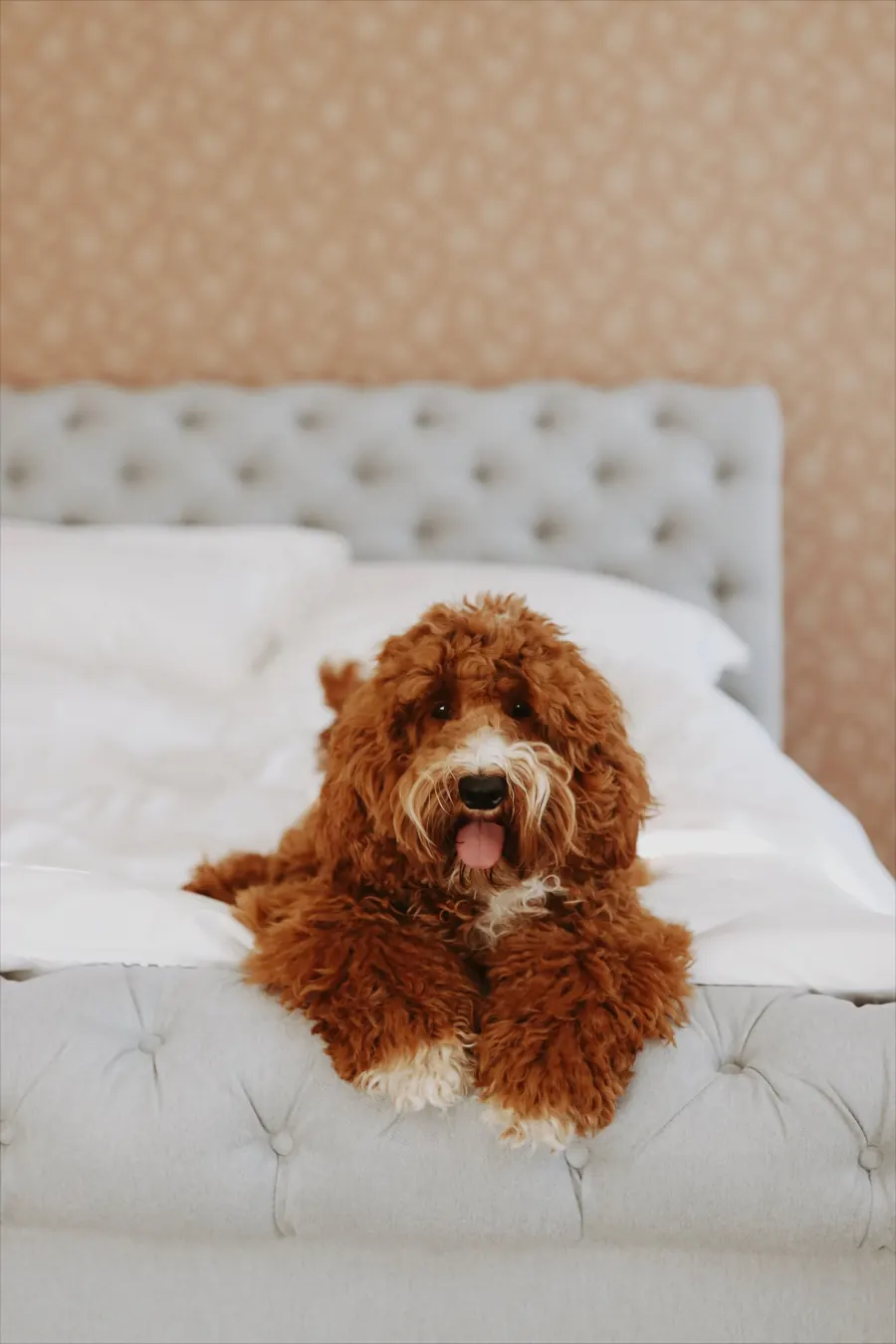
Hip scoring
| BVA Hip Scheme | Grades the dog’s hip joints out of a score of 106. |
|---|---|
| OFA Hip Scheme | Joint conformation is graded as Excellent, Good, Fair, Borderline, Mild Dysplasia, Moderate Dysplasia or Severe Dysplasia. |
Elbow scoring
| BVA Elbow Scheme | Grades the dog’s elbow joints 0 to 3 on each elbow. |
|---|---|
| OFA Elbow Scheme | The elbows are either negative or, if not clear, graded 1 to 3. |
Eyes
| BVA / CERF Eye Test | Eye examination for hereditary and non-hereditary problems within the eyes of the parents. |
|---|---|
| CERF Eye Test | The American equivalent. |
Patella luxation
| OFA tested | Grades 0 to 4. |
|---|
DNA tests
| DM | Degenerative myelopathy |
|---|---|
| EIC | Exercise induced collapse |
| SUV39H2 | Hereditary nasal parakeratosis |
| CHST6 | Macular corneal dystrophy |
| ATF2 | Neonatal encephalopathy with seizures |
| RPGRIP1 | Progressive retinal atrophy, cone-rod dystrophy 4 |
| PRCD | Progressive retinal atrophy, progressive rod-cone degeneration |
| VWD | Von Willebrand disease 1 |
| Coat colour | B locus and E locus |
| Trait test | IC locus (improper coat and furnishings) |
Exercise
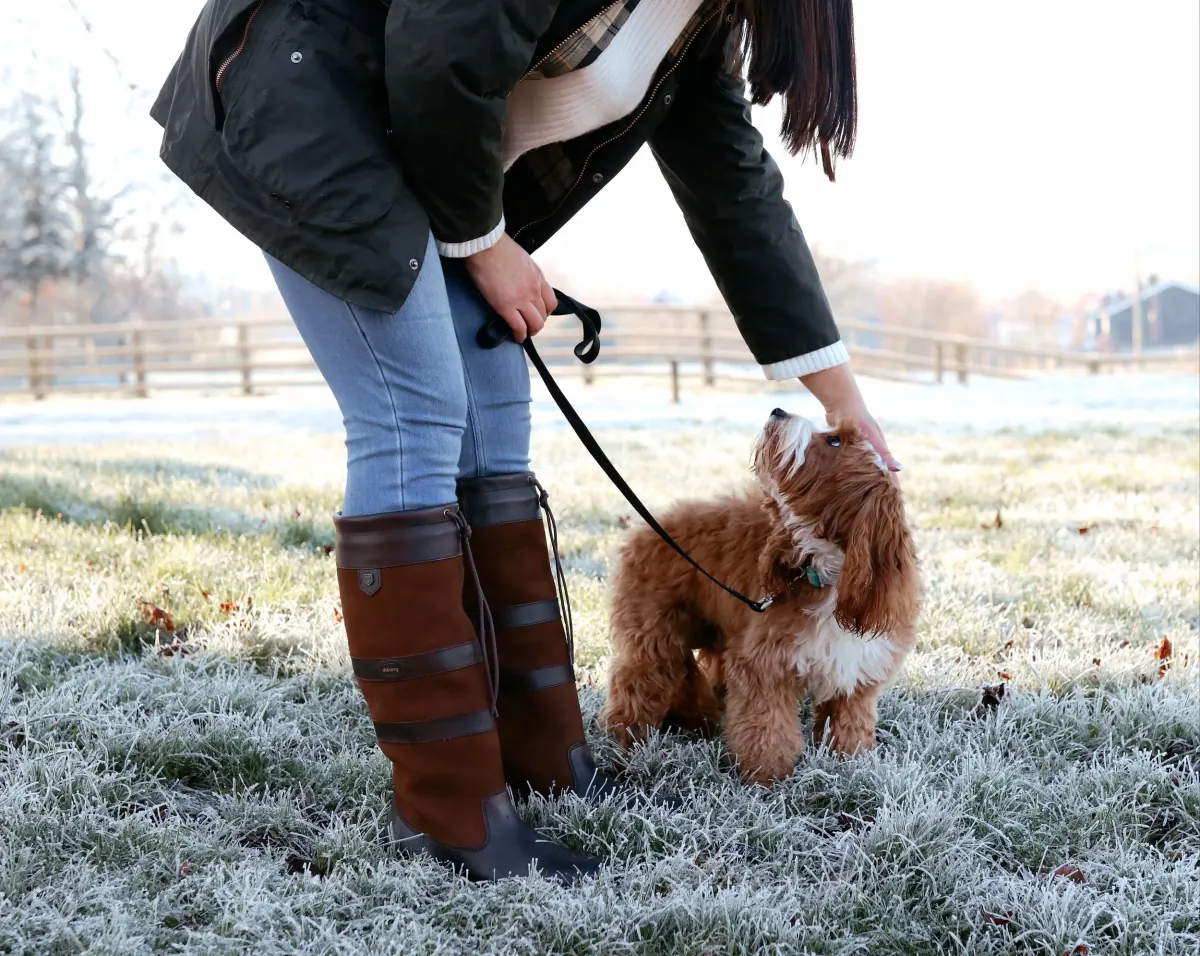
Labradoodles generally need half an hour of physical activity every day. They are great as running partners, love to play a good game of fetch and enjoy long walks. Exercise is paramount for your dog’s health, and it is good for the human-dog bond.
While your dog is still growing, do not take him or her for long walks, and definitely not with you for a run. Developing joints can be harmed by repetitive motion on hard surfaces, so take it easy, and gradually increase walking times until fully grown.
Avoid exercising in extreme heat. If you plan to take water along for you, remember that your dog will need water too… and always go prepared with lots of doggie bags!